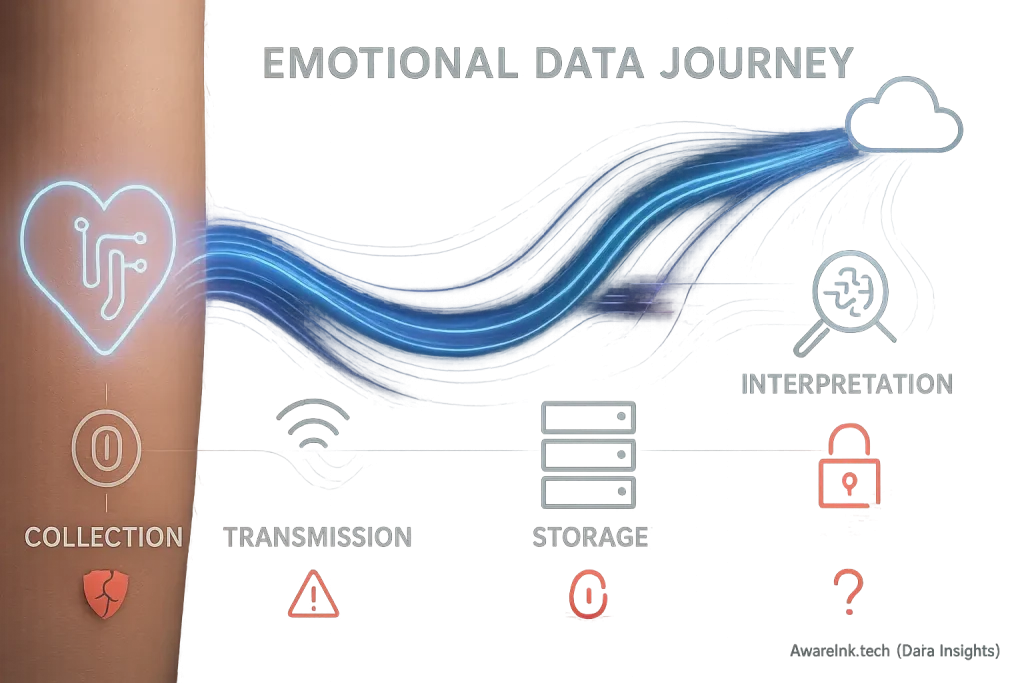
The Unseen Link: How Your Emotions Shape Your Sleep
Ever wake up exhausted, even after a full night? Wonder why? So many experience this. The answer frequently lies with our daily emotional states. Your feelings profoundly shape your nightly rest. This vital link is often missed.
The unspoken truth? Mood powerfully impacts sleep. We track steps. We monitor heart rates. Yet, the emotional 'noise' of our day often goes unchecked. This internal static becomes a significant sleep disruptor. Imagine a day filled with small stresses – a tricky email, a minor disagreement. You might brush them off. But what if those lingering emotional echoes are silently sabotaging your deep sleep? AwareInk's analysis of widespread experiences suggests this is common.
Mood-adaptive smart tattoos present a novel concept. These devices could finally bridge your emotional landscape and nightly rest. A new understanding. Better sleep. This resource explores how such technology might illuminate these crucial connections, offering a clearer path to improved well-being.
The Body's Night Shift: How Stress and Emotions Disrupt Rest
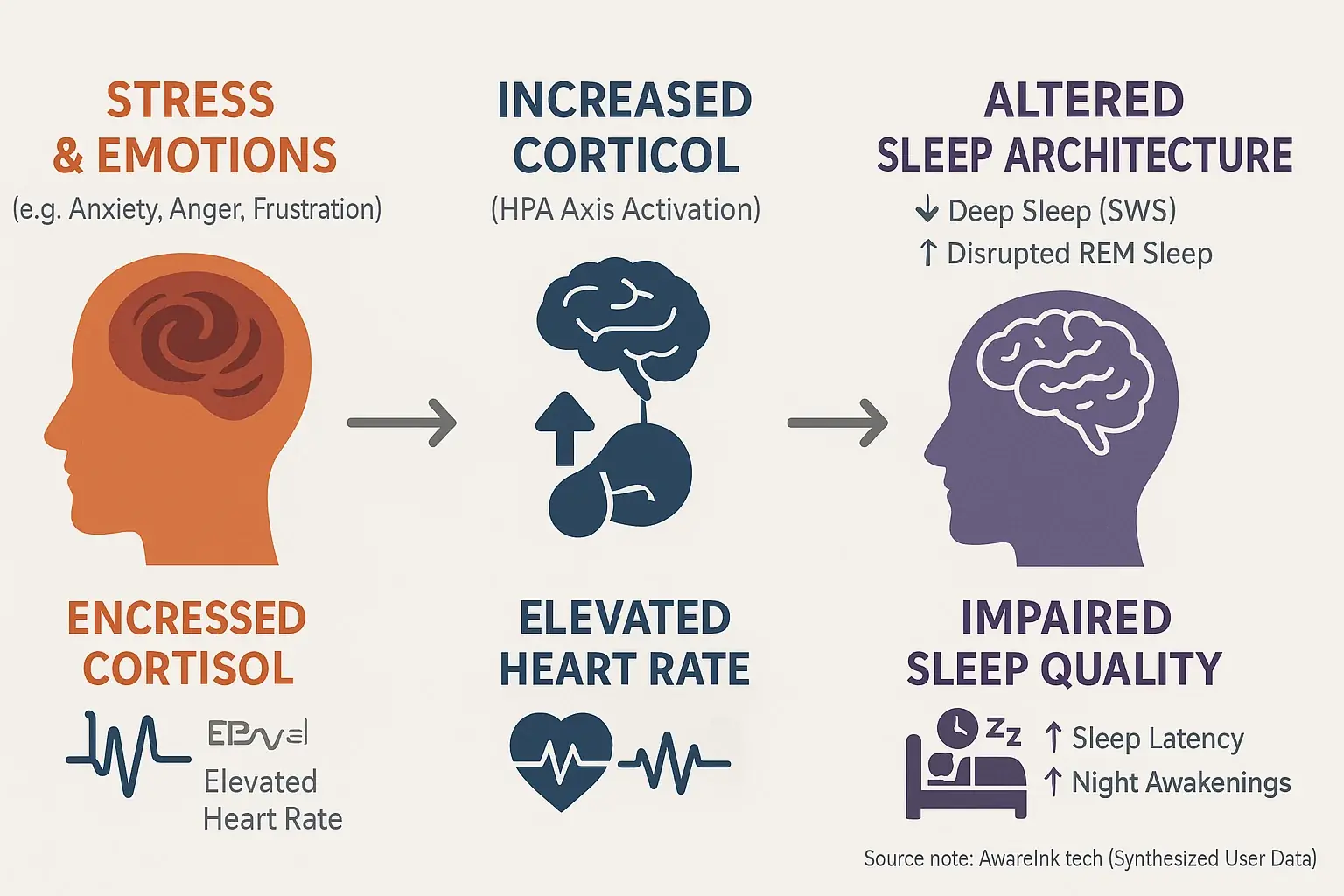
Stress activates the body’s alert system. This system is the 'fight or flight' response. It prepares you for immediate action. Sleep, however, requires profound calm. Think of your body's stress response. It acts like a dimmer switch for alertness. Stress cranks that switch to maximum brightness. This heightened arousal makes dimming down for deep sleep nearly impossible . Your mind may race. Your body often remains tense. Rest becomes a struggle.
These are not merely subjective feelings. They are measurable biological changes within your body. Stress consistently elevates heart rate . This makes relaxation difficult. Cortisol levels also increase significantly due D stress . Cortisol is the body's primary stress hormone. Its normal daily rhythm can be severely disrupted by ongoing stress, impairing sleep quality . Scientific findings show stress alters sleep architecture itself . This includes changes to deep sleep and REM sleep stages.
Different emotions can trigger distinct sleep disturbances. Anxiety frequently fuels racing thoughts. These thoughts prevent the mind from quieting for sleep. Anger might create a similar state of internal agitation. Sadness, conversely, could lead to fragmented sleep or even excessive sleeping without true restoration . Many people share a common experience. A day filled with quiet frustration often translates into a night of tossing and turning. This occurs even if they do not consciously feel 'stressed' at bedtime. The body remembers the day's accumulated tension.
Chronic sleep disruption from unmanaged emotional states is a serious concern. This ongoing interference with rest has potential health implications over time . The body requires consistent, restorative sleep. Without it, overall physical and mental well-being can decline. Understanding this connection is a key step.
Your Skin's Silent Storyteller: How Mood Tattoos Could Uncover Sleep Secrets
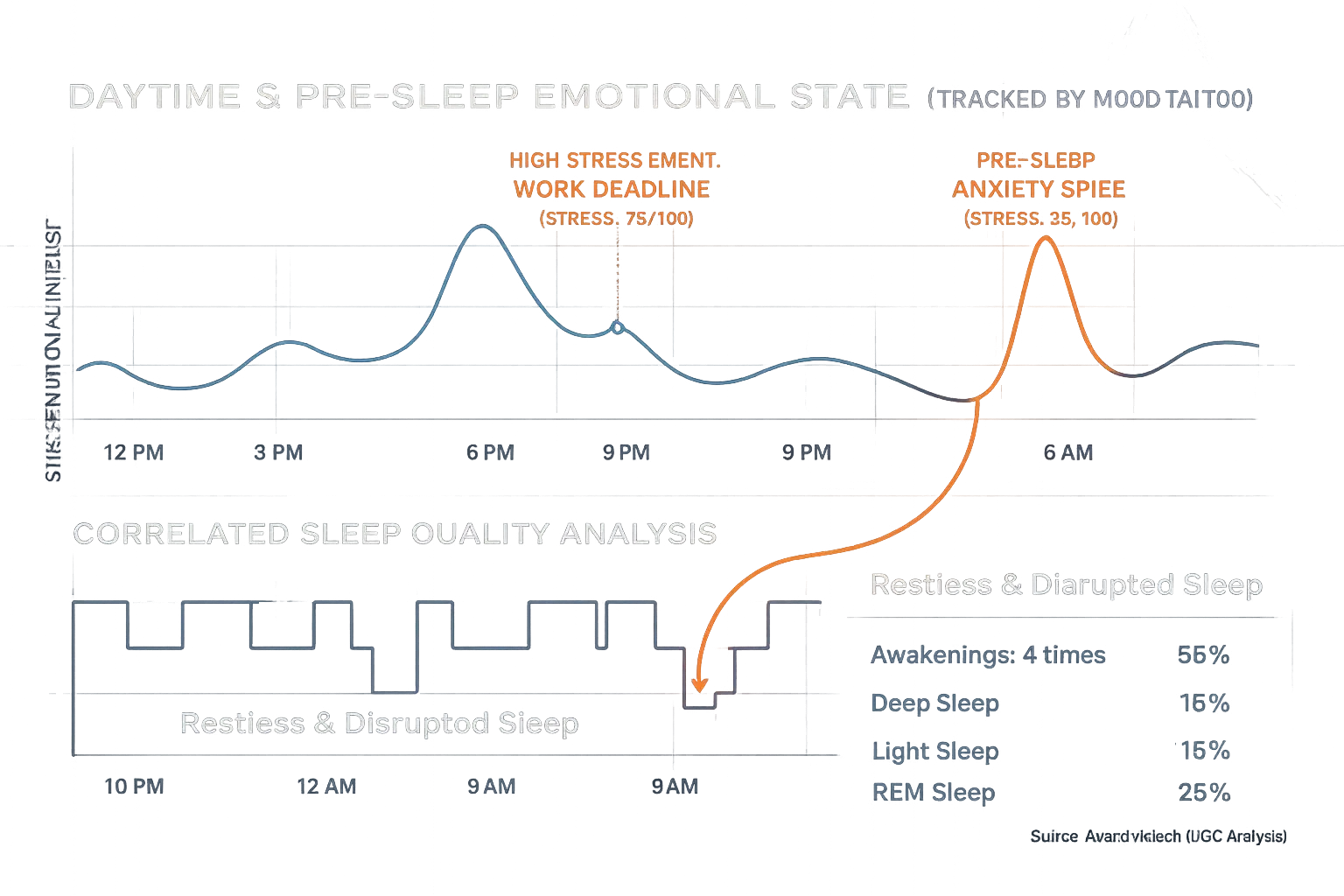
Smart tattoos could offer continuous, passive mood monitoring. These devices track physiological signals. Signals link directly to mood and stress. Traditional sleep trackers? They mostly focus on sleep itself. This is a crucial difference. Imagine your smart tattoo subtly tracking your stress levels all day. It then shows you how those peaks and valleys correlate with a restless night. That's the kind of insight AwareInk's research anticipates for users. This approach opens new doors for understanding.
Pre-sleep emotional states could become clearly visible. Smart tattoos might track these crucial moments before bed. They could visualize the data simply for you. Here is an unspoken truth many experience: evening emotions directly set the stage for sleep. A total blind spot for some. A mood tattoo could vividly highlight this powerful connection. AwareInk's analysis suggests this feature would be incredibly revealing for users seeking better rest. Suddenly, the "why" behind a bad night becomes clearer.
Smart tattoos also hold potential for identifying subtle daytime stress patterns. These are patterns you might not consciously recognize. Yet, they still impact sleep quality. This continuous data stream could reveal hidden triggers. Triggers for poor sleep that other devices often miss. AwareInk's conceptual framework suggests tattoos could map these almost invisible stressors. They could show their surprising power over your nightly rest. What if you could finally pinpoint those sneaky sleep thieves?
Decoding Your Night: Pinpointing Emotional Triggers for Restless Sleep
Emotional triggers impact your sleep. These triggers are intensely personal. Frequently, they operate beneath conscious awareness. A mood tattoo acts as your personal sleep detective. It helps uncover these hidden influences. Have you ever noticed that after certain types of interactions or activities, sleep doesn't come easily? Your tattoo could reveal why.
You can correlate tattoo data with daily life. This process identifies patterns. Link an evening mood reading, shown by your tattoo, to subsequent poor sleep. A tattoo indicating high stress before bed is one example. A restless night commonly follows such an indicator. The tattoo provides objective emotional data. This data complements your subjective feelings. It builds a clearer picture for action.
A key sleep insight concerns subtle stressors. These cumulative emotional pressures insidiously affect rest. They build. They frequently go completely unnoticed. Your mood tattoo offers continuous emotional insight. This constant monitoring illuminates hidden patterns. Such awareness empowers proactive lifestyle adjustments. You reclaim restful nights.
From Awareness to Action: Using Mood Tattoos for Mindful Sleep Practices
Your mood tattoo offers valuable evening emotional data. This data can transform simple awareness. It can become targeted action. Imagine your tattoo signals lingering tension before bed. You now possess a clear, undeniable cue. This cue prompts engagement in a calming breathing exercise. You move beyond just hoping for sleep. AwareInk.tech's research suggests this direct feedback empowers users. They can actively shape their pre-sleep state for the better.
Specific mindfulness techniques gain new precision with this technology. Tattoo feedback helps tailor practices like guided meditation. The meditation could dynamically adjust to your tattoo's indicated pre-sleep mood. Breathing exercises also receive a boost. They can specifically target physiological arousal levels your tattoo might display. The unspoken truth? Mindfulness is not merely about passively 'feeling calm'. You actively regulate your body's intricate physiological responses. A smart tattoo potentially makes these internal responses visible. It then guides your regulation efforts more effectively.
Consistent use builds powerful new habits. Tattoo-assisted mindfulness can gradually re-train your body and mind. Improved sleep quality often emerges from this dedicated process. Understand the tattoo as a supportive partner. It is not a replacement for your own inner work. AwareInk.tech's investigations highlight that this technology best supports personal commitment. It amplifies your journey toward more restful nights and balanced emotions.
The Road Ahead: Limitations and the Future of Mood Tattoos in Sleep Science
Mood-adaptive smart tattoos show promise for sleep insights. These devices are conceptually young. Their current capabilities for detailed sleep analysis have limitations. Tattoos primarily track physiological correlates of mood. They do not directly measure distinct sleep stages. It's tempting to imagine a tattoo instantly telling you why you slept poorly. The reality is more nuanced. It's about connecting the dots. Not magic. AwareInk.tech's analysis suggests this initial focus clarifies user expectations for the technology.
Specific conceptual hurdles exist for mood tattoos in sleep science. Distinguishing emotional arousal from physical exertion presents a challenge. Mapping complex human moods to simpler physiological data points is another. Accurate mapping demands sophisticated interpretation. An unspoken truth: external factors significantly impact sleep quality. Room temperature, ambient noise, and even bedding comfort play huge roles. A tattoo alone cannot capture this full environmental context. AwareInk.tech's synthesis of sleep research highlights this crucial point for a holistic understanding.
Future advancements could significantly enhance tattoo-based sleep analysis. Biosensor technology continues to evolve rapidly. Improved interpretation algorithms will refine mood-to-physiology mapping. Integration with other smart devices or dedicated sleep trackers offers a more comprehensive view. Could these changes revolutionize personal sleep insights? AwareInk.tech anticipates these developments may indeed offer such profound insights. The path requires ongoing research. Responsible innovation remains key to unlocking this potential.